Water that lingers around plants after rain can quietly damage roots, compact soil, and create uneven growing conditions. Weak garden drainage is often less about one major defect and more about several small problems working together: dense soil, low spots, excessive irrigation, blocked runoff paths, or beds that were never graded properly.
Fixing the cause is usually more effective than repeatedly trying to remove standing water.
Why Does Water Keep Pooling in Garden Beds?
Healthy garden soil should absorb moisture while allowing excess water to move deeper or away from the root zone. Heavy clay, compacted ground, and foot traffic can reduce the spaces that normally let water and air move through soil.
Low sections create another problem. Water naturally follows gravity, so even a shallow depression can collect runoff from surrounding paths, lawns, roofs, or raised areas.
Check the Pattern After Rain
Inspect the garden shortly after a steady rainfall rather than days later. Notice where water enters, where it slows down, and which spots remain wet longest.
That simple observation can reveal whether the problem comes from soil absorption, landscape grading, irrigation, or runoff arriving from somewhere else.
Improve Soil Before Building Bigger Drainage Systems
Compacted soil often responds well to gradual improvement. Organic matter such as finished compost can improve soil structure when incorporated appropriately rather than dumped into one isolated hole.
Gardeners comparing different improvement projects may find practical home and garden reading useful for developing a broader maintenance plan. The important step is matching the repair to the actual drainage problem instead of copying a solution meant for different soil.
Avoid digging individual planting holes and filling them with dramatically lighter soil when surrounding ground drains poorly. That can create a basin where water collects around roots.
Give Excess Water Somewhere Safe to Go
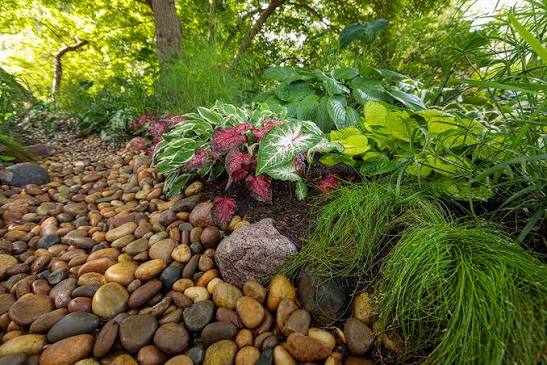
If water is flowing into a bed from a higher surface, changing the route may be more effective than altering every planting area. Small grading corrections, shallow swales, permeable paths, or properly designed drains can redirect runoff.
Looking at different property improvement approaches can help homeowners think beyond the immediate puddle and consider how nearby surfaces interact. Roof downspouts, patios, driveways, and neighboring lawn slopes can all influence a garden’s moisture.
| Drainage Problem | Likely Cause | Practical Response |
|---|---|---|
| Water after light rain | Compacted soil | Loosen and improve soil structure |
| Puddles in one spot | Local depression | Correct the grade |
| Water beside downspout | Concentrated runoff | Redirect discharge |
| Entire bed stays soggy | Poor overall drainage | Review drainage route |
Adjust Watering to Match What the Soil Can Handle
A drainage problem can sometimes be partly an irrigation problem. Automatic sprinklers may run according to a timer even when recent rain has already supplied enough moisture.
Broader ideas for improving everyday spaces can be useful when planning garden changes, but irrigation decisions should still be based on local soil conditions. Check moisture below the surface before watering again rather than relying only on how dry the top layer looks.
Mulch can reduce evaporation and protect soil structure, yet overly thick or poorly placed mulch may keep already-wet ground damp longer. Use it thoughtfully rather than treating more mulch as an automatic drainage cure.
Drainage Fixes That Can Make Things Worse
One common mistake is adding large amounts of sand to heavy clay without understanding how the materials will behave together. A small, poorly balanced amendment may not create the loose soil gardeners expect.
Another mistake is installing a drain without identifying where the collected water will discharge. Moving water from one puddle to another doesn’t solve much, and directing runoff toward structures or neighboring property can create bigger problems.
Plants also differ in moisture tolerance. Before rebuilding an entire bed, consider whether part of the solution is choosing species suited to naturally damp conditions.
Frequently Asked Questions
How long should water remain in a garden after rain?
Brief surface moisture is normal, but repeated standing water that remains long after surrounding ground has drained deserves attention. The pattern matters more than one isolated storm.
Can raised beds solve poor garden drainage?
They can improve the root environment by lifting plants above poorly drained soil, but they don’t necessarily correct runoff or standing water elsewhere in the yard.
Do drainage-loving plants fix waterlogged soil?
Plants adapted to wetter conditions can make damp areas easier to manage, but they won’t correct severe grading, runoff, or drainage defects.
Start With the Source of the Water
Weak garden drainage becomes easier to manage once you know whether the main issue is soil, grading, irrigation, or incoming runoff. Watch the garden during wet weather, make the smallest effective correction first, and evaluate the result before adding expensive drainage structures. A garden that moves excess water predictably is easier to maintain and gives roots a healthier balance of moisture and air.