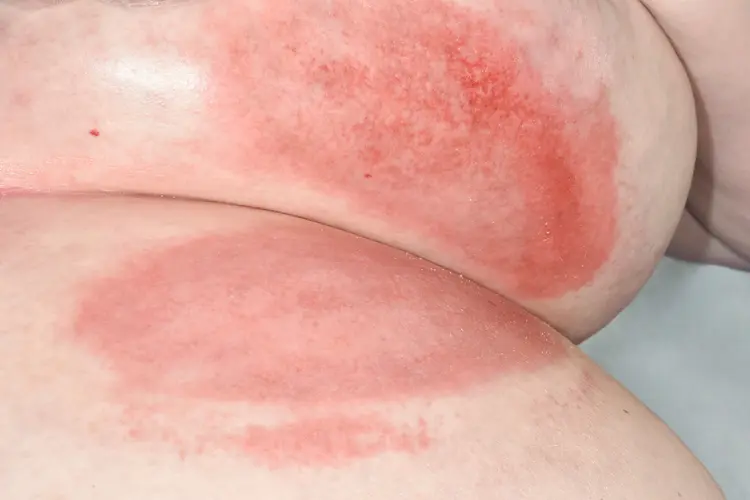
Sweat helps regulate body temperature, but skin that stays damp can become uncomfortable when heat, clothing, and repeated rubbing are added. Sweaty skin irritation commonly affects areas where skin touches skin or fabric, including the thighs, underarms, groin, feet, and beneath skin folds.
Managing moisture early often makes everyday activity more comfortable and reduces repeated friction.
Why Sweat and Friction Irritate Skin
Sweat itself isn’t always the main problem. Trouble often develops because damp skin becomes softer and more vulnerable to rubbing. Repeated movement can then produce tenderness, redness, stinging, or peeling.
The American Academy of Dermatology notes that frequently wet skin can become softened or macerated and may be more likely to chafe. Persistent moisture can also create conditions where some skin infections occur more easily.
People browsing skin-health reading alongside other online material should remember that irritation has several possible causes, so appearance alone may not identify what’s happening.
Keep High-Friction Areas as Dry as Practical
Changing damp clothing after exercise is one of the simplest measures. Breathable garments may also reduce the amount of moisture trapped against the skin.
Pay particular attention to socks, underwear, sports clothing, and other fabric that remains close to sweaty areas. General wellness guidance can be useful for building routine habits, but persistent skin problems deserve proper medical evaluation rather than online self-diagnosis.
Reduce Repeated Rubbing
Well-fitting clothing matters. Material that bunches, has rough seams, or repeatedly moves across one spot can worsen irritation even when sweating is moderate.
For activities such as walking, running, or cycling, preventing repetitive rubbing is often more useful than repeatedly trying to clean already-sensitive skin.
Clean Gently Instead of Scrubbing
Once skin feels irritated, aggressive washing can add another source of friction. Wash gently with lukewarm water and a mild cleanser, then pat rather than rub the area dry.
Some people repeatedly scrub sweaty skin because they assume discomfort means the area isn’t clean enough. That approach can make damaged skin feel more sensitive.
Broader personal-care resources may help readers compare everyday care ideas, but medical claims should be checked against established dermatology guidance.
| Situation | What May Happen | Better Approach |
|---|---|---|
| Damp clothing | Friction continues | Change into dry clothing |
| Hard scrubbing | Irritation may worsen | Wash gently |
| Tight seams | Repeated rubbing | Choose better-fitting fabric |
| Ongoing moisture | Skin softens | Improve drying and airflow |
Common Mistakes That Keep Irritation Going
One mistake is covering irritated skin with several fragranced products at once. If burning becomes worse, it can then be difficult to identify which product caused additional irritation.
Another is assuming every red area is ordinary chafing. Contact dermatitis, fungal problems, eczema, and other conditions can overlap in appearance. Symptoms alone may not reliably distinguish them.
When Should You Get Medical Help?
Seek medical advice when irritation is persistent, repeatedly returns, becomes increasingly painful, or does not improve with basic moisture and friction control.
Pus, spreading discoloration, significant swelling, warmth, open sores, fever, or worsening pain can indicate that more than simple friction is involved. The American Academy of Dermatology’s hyperhidrosis guidance also notes that frequently wet skin may be associated with chafing and skin infections.
Frequently Asked Questions
Can sweat alone cause a rash?
Sweat can contribute to irritation, especially when moisture remains trapped against the skin. Heat, friction, clothing, skin sensitivity, and other conditions may also be involved, so not every sweaty rash has the same cause.
Should irritated sweaty skin be scrubbed clean?
Usually, gentle cleansing is kinder to already-sensitive skin. Vigorous scrubbing increases mechanical friction and may worsen soreness or surface damage.
Why does irritation keep returning in the same place?
The same area may repeatedly experience moisture, rubbing, tight clothing, or limited airflow. Recurring irritation can also have another skin-related cause that requires evaluation.
Break the Moisture-and-Friction Cycle
The practical goal is simple: shorten the time skin remains wet and reduce whatever repeatedly rubs against it. Dry clothing, gentle cleansing, better-fitting fabrics, and attention to recurring trouble spots can make a noticeable difference.
If the area keeps worsening or develops signs of infection, professional evaluation is the safer next step.
This article is for general informational purposes and is not a substitute for professional medical advice, diagnosis, or treatment.