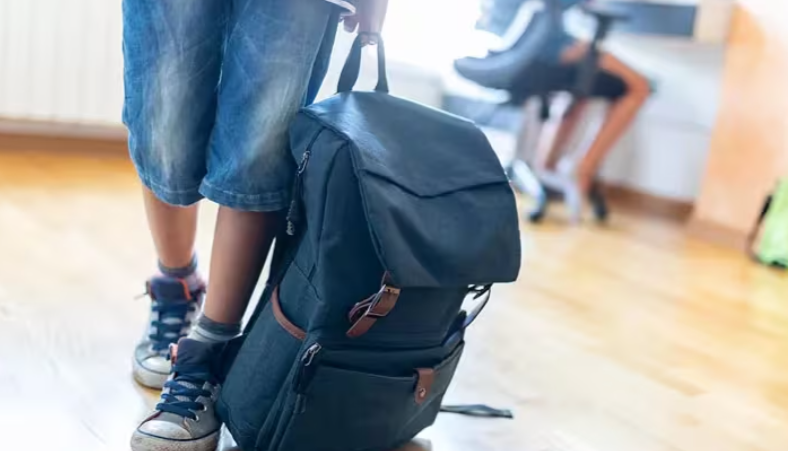
A parent’s guide to backpack fit, everyday posture, and knowing when a sore shoulder is worth a second look.
Late August in Calgary means new shoes, a fresh binder, and a backpack that somehow needs replacing again even though last year’s looked fine in June. Most of that shopping trip is about color and brand. Fit and load rarely make the list, even though a growing spine is still developing its curves, its muscle balance, and its tolerance for repeated stress through the school year.
None of this needs to be alarming. Kids are resilient, and the vast majority of backpack-related complaints resolve with a few practical changes. But a quick check at the start of the year, the kind that takes five minutes in the driveway before the first day, catches problems before they turn into a pattern of avoidance, poor posture, or missed practices.
What an Overloaded Pack Does to a Growing Spine
A backpack worn low, loose, or loaded past a comfortable point pulls the body’s center of gravity backward. To compensate, a child leans forward at the trunk and rounds the shoulders. Held for six or seven hours a day, that compensation asks the neck extensors, upper trapezius, and lower back muscles to work harder than they would carrying nothing at all.
This is a mechanical load problem for most kids, not a structural damage problem. The spine is not being bent out of shape by a Tuesday’s worth of textbooks. What clinicians see more often is fatigue: muscles that tire faster, shoulders that round forward by the end of the day, and a general sense of a child slumping into the couch the moment they get home.
Fit Is the Bigger Variable, Not Just Weight
Two kids can carry the same load and have completely different experiences depending on how the pack sits. A pack worn on one shoulder concentrates force on one side of the spine and one set of neck muscles, which is why the classic single-strap sling style tends to draw more complaints than a properly worn two-strap pack.
- Both straps on, adjusted so the pack sits close to the back rather than sagging away from it
- Bottom of the pack resting at roughly hip level, not down near the back of the knees
- Chest strap clipped if the pack has one, which keeps the shoulder straps from sliding outward under load
- Waist strap used for heavier days, since it shifts weight onto the hips instead of the shoulders and spine
- Wide, padded straps rather than thin webbing that digs into the trapezius muscle
None of this requires special equipment. It requires five minutes of adjusting straps that most kids leave exactly where they were set the previous September, once their growth has already made that setting wrong.
How Much Weight Is Reasonable
Clinicians generally advise keeping pack weight to a modest fraction of a child’s body weight rather than filling every compartment because there is room. There is no single number that applies cleanly to every child, since a well-conditioned athlete and a child recovering from an illness tolerate load differently, and a properly fitted pack with good waist strap use tolerates more than a loose one.
The practical version of this guidance is simpler than a formula: if a child cannot put the pack on without shrugging hard, cannot stand up straight while wearing it, or complains that it hurts within the first ten minutes of a walk to the bus stop, it is too heavy for that day and something needs to come out.
Ordinary Soreness Versus Pain Worth a Look
A bit of shoulder or lower back tiredness in the first week or two back at school is common and usually settles as muscles adapt to carrying a load again after a loose summer schedule. That kind of soreness tends to be mild, felt on both sides, and better after a night’s rest.
A different pattern deserves attention. Watch for these signs rather than assuming every complaint is routine:
- Numbness or tingling in the arms, hands, or fingers
- Pain that wakes a child up at night or is worse first thing in the morning
- Pain concentrated in one specific spot on the spine rather than general muscle tiredness
- Pain that does not settle after several days of lighter loads and rest
- A visible change in posture, such as one shoulder sitting noticeably higher than the other
Any of these warrants a conversation with a clinician rather than a wait-and-see approach. Most of the time the finding is straightforward muscular strain, but a proper assessment rules out the less common causes and gives parents an actual answer instead of a guess.
Growth Spurts Change the Fit Mid-Year
A backpack adjusted correctly in the first week of school does not necessarily stay correct through June. Kids can grow several centimetres over a school year, and a growth spurt shifts torso length, shoulder width, and hip height enough that straps set in September can sit wrong by January without anyone noticing the change happen gradually.
The fix is not a new backpack every few months. It is a repeat of the same five-minute check done at the start of the year: watch the child put the pack on, look at where it sits relative to the hips, and re-tighten straps that have started riding low. A pack that once sat close to the back can drift outward as a child’s frame changes shape, and that drift reintroduces the same forward-lean compensation described earlier.
A practical habit is tying the recheck to something that already happens on a schedule, a parent-teacher conference, a report card, or simply the switch from fall to winter boots. Attaching it to an existing routine makes it far more likely to actually happen than relying on someone to remember on their own.
The Bigger Daily Load Most Parents Miss
Backpacks get the attention, but for most teenagers the larger postural load comes from hours spent looking down at a phone and hunched over a laptop or desk. A backpack is worn for a portion of the day. Screen posture, chin dropped and shoulders curled forward, often runs for several hours between homework, gaming, and social scrolling.
That sustained forward head position asks the neck and upper back to hold significantly more effective weight than a well-fitted backpack ever does, simply because of how leverage works when the head tips forward. Addressing backpack fit while ignoring desk and phone posture treats a smaller piece of a larger pattern.
Practical Things That Actually Help
Small changes tend to matter more than any single piece of gear. A locker routine that lets a student swap books between classes instead of carrying the full day’s load at once cuts the heaviest hours down considerably. Where a school offers digital textbooks or a shared classroom set, using it instead of the print copy removes weight without any behavior change required.
Strength and movement through sport or regular activity also matter. Kids who stay active tend to tolerate backpack load, desk posture, and general daily strain better than kids who are sedentary most of the week, since stronger postural muscles fatigue less quickly under the same demand.
When an Assessment Makes Sense
For most families, backpack complaints resolve with better fit and a lighter daily load. But if soreness persists past a couple of weeks, if a red-flag symptom shows up, or if a parent simply wants a professional set of eyes on how their child is carrying themselves, a physiotherapy or chiropractic assessment is a reasonable next step rather than an overreaction.
A clinician can check posture, muscle balance, and how a child actually wears their pack, then suggest specific adjustments rather than general advice. Physio, chiro, massage and dietician care in Calgary under one roof also means a finding in one discipline, a tight hip flexor pattern affecting posture, for example, can be discussed directly with the practitioners who see the rest of the picture.
The Five Minute Check Worth Doing This Week
A properly worn backpack, a locker routine, and some attention to screen posture will handle the majority of back-to-school aches without any need for intervention. What matters is catching the pattern early: adjusting straps in the driveway, watching for the difference between normal first-week soreness and something more specific, and treating a phone-down posture as seriously as a pack that sits too low.
Most kids will not need a clinical visit at all. For the ones who do, an early look is far easier to act on than a pattern that has been quietly building since September.
About the author: this article was contributed by Primaris Health, a Calgary clinic where physiotherapy and chiropractic care work alongside physicians and registered dietitians under shared charting, so posture concerns are tracked as part of a child’s full picture rather than in isolation.