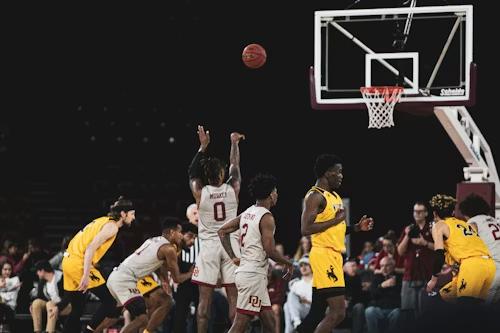
Basketball is one of the most physically demanding team sports in the world. A full 48-minute NBA game involves hundreds of explosive sprints, changes of direction, jumps, and defensive possessions interspersed with moments of lower intensity — a physiological profile that demands a uniquely complete athletic conditioning. For players at every level, developing the right combination of explosive power, aerobic endurance, lactate tolerance, and recovery capacity is what transforms individual athletic qualities into complete game-level performance.
Understanding the Energy Systems Used in Basketball
Basketball uses all three primary energy systems. The ATP-PCr system powers short, maximum-intensity bursts (0-10 seconds) — the explosions that drive dunks, defensive closeouts, and fastbreak sprints. The glycolytic system powers sustained high-intensity efforts (10 seconds to 2 minutes) — long offensive possessions, extended defensive stands. For accurate jump measurements, dunk calculator tools provide the exact figures you need. The aerobic system provides the baseline endurance that supports recovery between high-intensity efforts throughout a full game. A complete conditioning program develops all three.
Aerobic Base Development
The aerobic system serves as the “recovery engine” between high-intensity basketball efforts. Players with better aerobic fitness recover faster between sprints, maintain higher average intensities throughout games, and experience less performance decline in the fourth quarter. Aerobic development is built through steady-state cardio (30 to 60 minutes of moderate-intensity running, cycling, or swimming), which is best done in the early off-season when distance from competitive demands is greatest.
High-Intensity Interval Training for Basketball
High-intensity interval training (HIIT) is particularly well-matched to basketball’s demand profile, simulating the work-to-rest ratios found in actual games. Basketball-specific HIIT protocols might include 15-second all-out sprint intervals followed by 45 seconds of active recovery, repeated 10 to 15 times. This format develops glycolytic capacity, lactate tolerance, and the repeated sprint ability that determine fourth-quarter performance levels.
On-Court Conditioning: Making It Specific
The most basketball-relevant conditioning happens on the basketball court in sport-specific movements: full-court suicides, defensive slide circuits, transition drills, and small-sided competitive games (3-on-3, 4-on-4) that replicate game demands in a controlled environment. On-court conditioning develops the movement patterns, cognitive demands, and physiological challenges that are most directly relevant to actual game performance — which no amount of running on a track or treadmill can fully replicate.
Conditioning and Jump Performance: The Fatigue Effect
Jumping under fatigue is a distinct skill from jumping when fresh. Research consistently shows that vertical leap decreases under fatigue — the degree of decrease is related to aerobic conditioning level. Well-conditioned players maintain a higher proportion of their fresh jump height even in the fourth quarter, while deconditioned players may lose 10 to 20% of their vertical leap as games progress. Training jump performance under fatigue conditions prepares athletes for the reality of game-level demands.
Balancing Conditioning With Recovery
Aggressive conditioning programs can interfere with strength and power development if they’re not properly periodized with adequate recovery. Heavy conditioning work and heavy strength training place competing demands on the body’s recovery systems. Smart programming sequences conditioning and strength work to minimize this interference: prioritizing strength and power in pre-season and early off-season, shifting emphasis toward conditioning as the competitive season approaches, and maintaining both qualities in balance in-season.