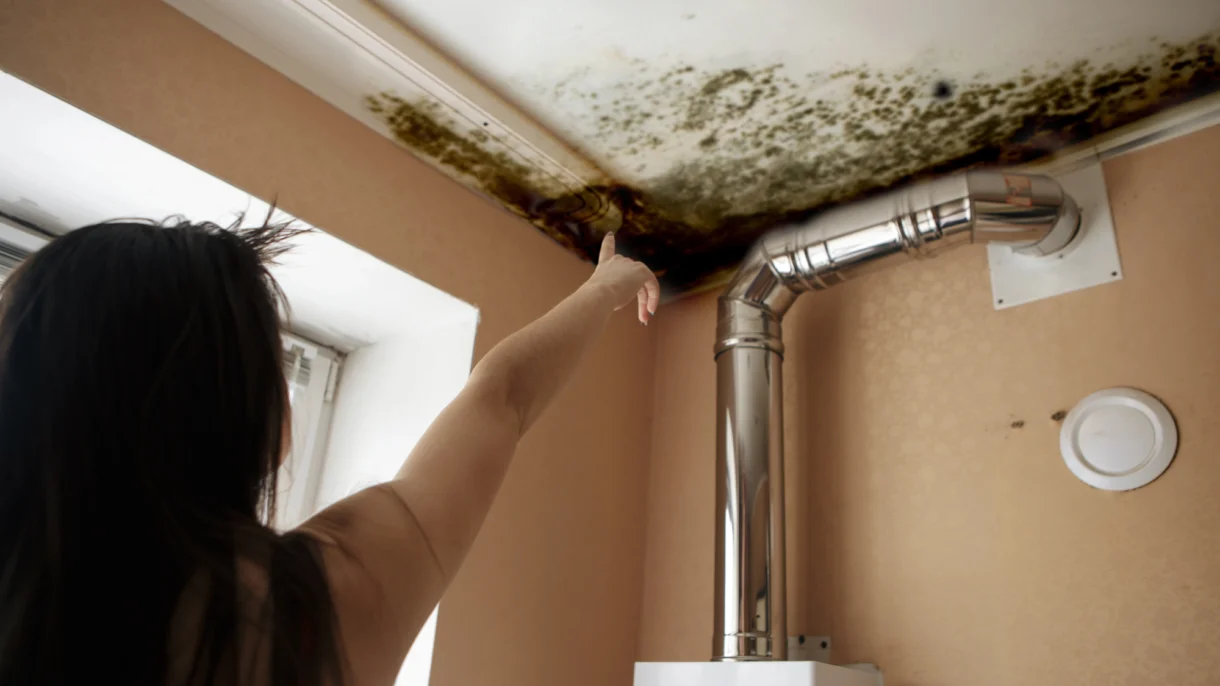
Damp rooms can do more than smell unpleasant. Indoor mold may irritate the nose, throat, eyes, skin, or lungs, especially in people who already have allergies, asthma, or other respiratory conditions.
Reducing moisture is usually more useful than focusing only on the visible mold. Without correcting the dampness that supports growth, mold can return after surface cleaning.
Why Damp Indoor Areas Can Cause Problems
Mold grows where moisture remains available. Roof leaks, plumbing problems, condensation, flooding, and poorly ventilated bathrooms or basements can all create suitable conditions.
The CDC notes that exposure to damp or moldy environments may cause nasal stuffiness, sore throat, coughing, wheezing, irritated eyes, or skin reactions in some people. People with asthma or mold allergies can be more sensitive. CDC guidance on mold also emphasizes correcting the moisture problem rather than concentrating only on identifying the mold species.
Look Beyond the Visible Patch
A small stain on a wall may be the obvious clue, but moisture can also collect behind drywall, around windows, beneath flooring, or near plumbing.
People reading indoor wellness material online may encounter many possible explanations for respiratory discomfort. The condition of the building itself should remain part of the investigation when symptoms repeatedly appear in a damp environment.
Control Moisture Before Mold Returns
Cleaning a surface without fixing its moisture source often produces only a temporary improvement. Repair leaking pipes or roofs, improve bathroom ventilation, and deal with condensation where practical.
General healthy home resources may help people think more broadly about their surroundings, but persistent dampness deserves direct attention. A recurring wet wall, ceiling stain, or musty area usually needs its source corrected.
| Indoor Clue | Possible Issue | Practical Response |
|---|---|---|
| Musty odor | Hidden dampness | Inspect nearby materials |
| Window condensation | Excess moisture | Improve airflow |
| Recurring wall spots | Moisture remains | Find the water source |
| Wet carpet | Trapped moisture | Dry or remove promptly |
Reduce Exposure During Cleanup
Small areas may sometimes be manageable with appropriate household cleaning, but cleanup should not spread contaminated dust and debris through the home. Follow product directions, ventilate the area when appropriate, and never mix cleaning chemicals.
Broader everyday health articles can add useful context about indoor habits, yet they should not replace specific mold-cleanup guidance from public health or environmental authorities.
Large contamination, repeated flooding, sewage involvement, or extensive damage may call for professional assessment rather than repeated do-it-yourself cleaning.
Where Mold Assumptions Go Wrong
Seeing mold does not prove that every headache, cough, rash, or tired feeling is caused by mold. Many respiratory and allergy symptoms overlap with infections, pollen exposure, dust, pets, smoke, and other triggers.
The opposite mistake is dismissing dampness because symptoms are mild. Even when mold is not the sole cause of discomfort, moisture damage still deserves correction because continued dampness allows indoor growth to return.
When Symptoms Need Medical Attention
Seek medical advice when coughing, wheezing, nasal symptoms, eye irritation, or skin problems are persistent, worsening, or difficult to explain. People with asthma, chronic lung disease, significant allergies, or weakened immune systems may need earlier guidance.
Urgent assessment is appropriate for severe difficulty breathing, significant chest symptoms, fainting, confusion, or another rapidly worsening problem. Do not rely on mold cleanup alone when serious breathing symptoms are present.
Frequently Asked Questions
Does all indoor mold cause symptoms?
No. People respond differently to mold exposure. Some experience irritation or allergy symptoms, while others notice little or nothing. The amount of dampness, individual sensitivity, and existing respiratory conditions can influence the response.
Should I test mold before removing it?
Not always. CDC guidance says that if mold can be seen or smelled, identifying its exact type usually is not necessary before addressing the moisture source and removing the growth safely.
Can mold return after cleaning?
Yes. Mold can grow again when the underlying moisture problem remains. A repaired leak, better ventilation, faster drying, or another form of moisture control is often necessary for lasting improvement.
Fix the Dampness, Not Only the Stain
Recurring mold is often a moisture warning rather than simply a cleaning problem. Correct leaks, improve ventilation, dry wet materials promptly, and pay attention to any symptoms that repeatedly appear in the affected space.
If respiratory or allergy-like symptoms persist despite reducing exposure, arrange an appropriate medical evaluation instead of assuming the building is the only cause.
This article is for general informational purposes and is not a substitute for professional medical advice, diagnosis, or treatment.